The 2026 State of the Photography Industry report offers a candid look at the realities photographers face: operational challenges, creative aspirations, and the strategies impacting their businesses today.












Key Findings
AI Supports, Not Replaces, Creativity
Almost 50% of photographers use AI on a weekly basis, mainly for administrative tasks like emails, captions, and marketing content.
Photographers Are Turning Creative Exploration into New Revenue
Nearly half of photographers plan to explore a new genre in 2026, with art, landscape, and documentary work emerging as both creative outlets and potential new income streams.
Referrals
Drive Business
85% of clients come from referrals, showing that relationships and word-of-mouth remain the most powerful growth strategy.
Stress Hits Hard
Just 5% of photographers feel they manage stress well. The responsibilities of running a business leave most people feeling overwhelmed.
Project Management Systems Are Rare
Project management systems are rare despite the wide availability of tools, many photographers still rely on spreadsheets or mental tracking—leaving a heavy operational workload and fundamental business information disorganized and unclear.
Introduction
Every year, we ask photographers to do something that takes courage: to stop, look honestly at their businesses and their creative lives, and share their stories.
This is our seventh annual State of the Photography Industry Report, and this year’s data feels especially personal. Behind every percentage point is someone managing shoots, editing until midnight, wrestling with social media, and questioning whether their pricing truly reflects their work.
Whether you read from beginning to end or jump straight to the sections that resonate most, our hope is the same: that you find helpful insights here. And perhaps, most importantly, confirmation that you’re not alone in the challenges you’re navigating.
Table of Contents
Methodology & Respondent Snapshot
Methodology & Respondent Snapshot
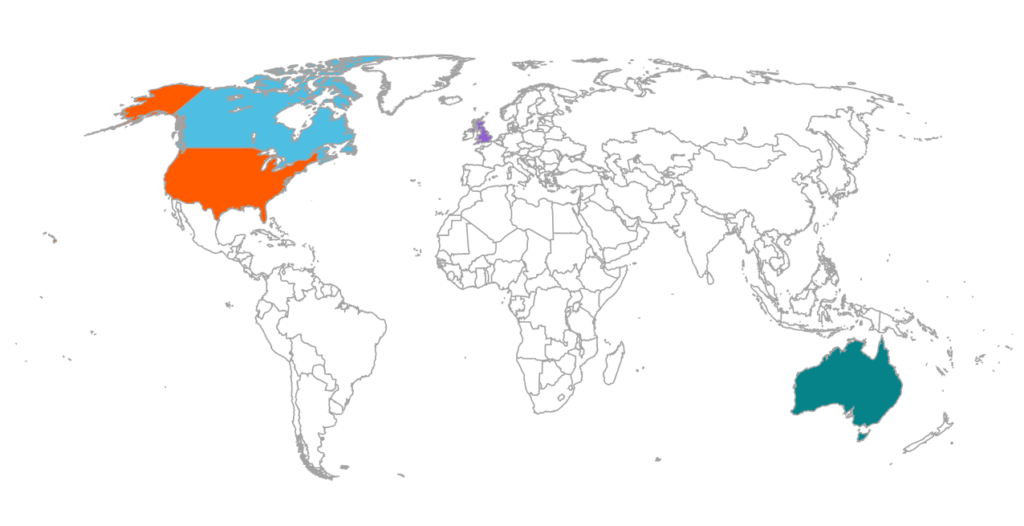
In early 2026, more than 4,900 photographers across 90+ countries shared an honest look at their businesses, creative ambitions, and day-to-day realities. Most of the respondents came from the United States, particularly California, Texas, and New York. In Canada, Ontario, British Columbia, and Alberta were the most represented.
Respondents by Country
4,916 photographers across 90+ countries – 2026 SOPI Survey
Surveyed
The majority of responders are over 35 years old, with the largest concentration in the 45-54 age range. Survey participants in the age range of 18-34 made up 11.1% of respondents, representing the voices of emerging and early-career photographers.
Photography Trends
Creative Exploration and New Genres
In 2025, 30% of photographers explored a new genre of photography.
In 2026, 47% of respondents reported plans to pursue another area in the field, indicating a meaningful increase in creative ambition.
But the shift isn’t random.
explored a new genre
2025
plan to explore a new genre
2026
The most commonly explored new categories in 2025 were client-based—boutique photography and commercial work. Both represent practical development directly tied to increased revenue opportunities.
However, in 2026, the focus shifts. Art, landscape, and fine art now lead the list of intended exploration. Documentary and photojournalism also see a noteworthy increase. This is less a rejection of commercial work and more a matter of rebalancing; photographers are seeking creative satisfaction that restores their artistic energy and self-fulfillment.
61.3%
Expand Skill Set
55.9%
Diversify Income
39.6%
Client Demand
36.5%
Creative Fulfillment & Burnout Prevention
34.3%
Personal Interest
Why Photographers Explore New Genres
Among photographers who tried something new in 2025 — top motivations cited
Pro Tip
Learn how to price your art. Start by testing different price points for prints, limited editions, or commissioned pieces. Track which items sell and how clients respond to the pricing to better understand what your work is worth and how to price it sustainably.
Photography Business Benchmarks
Pricing, Costs, and Bookings
Nearly half of photographers admit to regularly undercharging. At the same time, 43% struggle to raise prices. This is one of the clearest points of tension in the industry.
The stress data points to real pressure on the business side, painting a vivid picture of the challenges at hand. 39% of photographers identify business development and client acquisition as primary sources of pressure. Social media demands weigh heavily on 32% of respondents. However, most notably, only 5% of individuals believe they are effectively managing stress. This industry isn’t lacking in talent or creativity; it’s filled with individuals who shoulder considerable operational responsibilities.
Cost increases compound the problem. Two-thirds of photographers saw their expenses increase in 2025. Bookings, however, were mixed. 35% booked more jobs year-over-year, 28% booked fewer, while 32% of participants reported their bookings remained unchanged.
booked more jobs year-over-year
bookings remained unchanged
booked fewer jobs year-over-year
Unsurprisingly, digital sales trended upward, while physical product sales declined. This reflects broader consumer convenience trends, not necessarily a loss of interest in tangible goods.
Physical Products Sold Year-Over-Year
How photographers’ physical product sales have shifted across three consecutive survey years
Pro Tip
Pricing confidence is built on real financial data. Run your numbers at least once a year—actual costs, not guesses. When pricing reflects reality, raising rates becomes less emotional and more about the facts.
Marketing For Photographers
Referrals, Social media, and discovery

Referrals
Referrals remain the dominant acquisition channel for photographers—85% rely on them, and 95% find them effective. This is a powerful endorsement of relationship-driven growth.

Instagram ranks second for discovery, outperforming Facebook and even Google in perceived importance. However, Instagram is also the most cited marketing challenge, with 85% of photographers reporting that they find it difficult to understand and use.

TikTok
TikTok remains largely elusive for client acquisition, with only a small percentage reporting measurable results.
Pro Tip
Struggling with Instagram? Try short, practical courses on Later, HubSpot, or Skillshare to learn content planning, hashtags, and engagement strategies. Small, consistent steps make the platform easier to manage and more effective for your business.
Client Experience Trends
What Sets Photographers Apart
When asked how they stand out from other photographers, respondents overwhelmingly point to communication and client experience.
The industry recognizes that value is based on personal relationships.
- Premium communication leads
- Unique in-person experience follows closely
- Personalized consultations and signature editing styles remain strong
- Only a small minority competes on price
How Photographers Define Their Client Experience
What sets photographers apart — the ways they differentiate their service and create lasting client impressions
How Photographers Educate Clients on Print & Product Value
Whether photographers actively discuss the value of physical prints and products with their clients
However, product education tells a more complicated story. Only about one-third of photographers say that they consistently educate clients on print quality and archival longevity, while another third do so inconsistently. A combined segment either assumes clients understand or admits to having limited knowledge themselves.
This suggests that while photographers place a high value on the client experience, many leave revenue-driving conversations about physical products unexplored.
Pro Tip
Integrate product education into your consultation workflow. Show tangible sample prints, albums, or canvases, and connect physical products to legacy. For another low-lift way to educate clients, add a landing page or blog post on your website with images of samples and FAQ’s, and link to it in your email communications.
Operations & Workflow
Software Use and Business Systems
Adobe’s ecosystem remains the critical backbone of the photographer workflow. Adobe Lightroom leads in both culling and editing, with Adobe Photoshop as the next most common editing tool.
For gallery delivery, ShootProof leads usage among respondents, followed by Zenfolio, with Pixieset, Dropbox, and WeTransfer also widely used.
The data is clear: photographers have made substantial investments in refining the tools that influence both the quality of their images and the efficiency of client delivery.
Where the picture changes is in project management…it’s largely informal.
31%
track projects in spreadsheets
29%
tracks jobs mentally or on paper
45%
don’t use business operations software at all
29.5%
use accounting software
21.9%
use CRM or booking systems
Time allocation highlights this imbalance. About 70% of photographers spend between 26% and 75% of their time editing photos. In contrast, around 60% dedicate less than 25% of their time to administrative work.
Altogether, the data reveal an unquestionable operational gap. Photographers have built sophisticated, well-established creative workflows, but the systems supporting the business side of their work remain far less developed. This gap likely contributes to the stress, pricing pressure, administrative burden, and burnout frequently reported across the industry.
Pro Tip
Choosing one primary project management system to manage clients, bookings, finances, and projects can dramatically reduce mental overhead. When everything lives in one place, it’s easier to stay organized, spend less time tracking details, and free up more energy for the creative work that matters most.
Solo Vs Team
Delegation Trends in Photography Businesses
The photography industry is an overwhelmingly solo endeavor. Over 60% of photographers run their businesses entirely on their own, managing shoots, editing, marketing, and finances without outside help.
Among those who do hire support, assistance is usually focused on the shoot itself—second shooters, assistants, and editors—while roles that could drive long-term growth, like social media, content creation, or bookkeeping, remain rare. This shows how much photographers carry on their own, balancing the creative and operational demands of their business every day.
When we asked photographers which tasks they put off the most, the procrastination patterns became clear. Bookkeeping and finances top the list at 27.7%, followed by marketing and social media at 22.7%, and website updates at 15.7%.
Yet when asked what they would delegate immediately, social media and content creation jump to the top, overtaking bookkeeping and post-processing. Photographers may avoid finances, but the relentless demands of content and marketing are what they most want off their plate.
Roles Photographers Outsourced in 2025
Which roles photographers delegated to others — whether hired staff, freelancers, or contractors
Roles Photographers Want to Outsource Most
If budget were no obstacle — the tasks photographers most wish they could hand off
Pro Tip
Don’t delegate what you avoid; delegate what never stops. Ongoing tasks like content creation and social media management are significant time drains, but they are also the most effective way to take back control of your schedule.
AI in Photography
Adoption, Use Cases, and Boundaries
AI usage is becoming more mainstream within the industry. Nearly half of the respondents use AI tools weekly or more. Only a small minority have never experimented at all. Visual AI applications, including editing and culling, rank much lower.
Among active AI users, applications are predominantly text-based:
Where AI is Making an Impact in Photography Business
Among photographers who use AI tools — multiple responses allowed
The pattern is evident; photographers are using AI to assist with administrative and communication tasks, but creative control remains firmly in their hands. AI is functioning as a productivity partner that helps structure ideas, refine communications, and accelerate day-to-day tasks.
Importantly, this aligns with delegation trends. AI serves as a support for solopreneurs, easing the burden of tasks they traditionally handled entirely on their own. Instead of replacing a hired role, it offers efficiency and help.
Pro Tip
To proactively address client inquiries, it’s a great idea to create an “AI usage policy” for your business. Then, make sure to add it to a dedicated page on your website. Including a link to this page in your client communications will keep everyone informed and demonstrate your commitment to transparency.
Continuous Learning
What Photographers Want to Learn Next
Photographers continue to invest in growth. Photography blogs and websites are the leading educational sources, followed closely by social media, self-experimentation, peer networking, and YouTube tutorials.
When asked what they want to learn:

Editing and
Post-Processing

Lighting Techniques

Marketing, Social
Strategy, and Pricing

Marketing and SEO
Convention and trade show attendance reports remained lukewarm, suggesting that while in-person learning still matters, many photographers prefer flexible, self-directed education.
Pro Tip
Create quarterly learning plans that tie each skill to a real business goal—like increasing client bookings, improving your editing workflow, or studying a new lighting technique. Small, focused steps make growth consistent and measurable.
Conclusion
What the 2026 SOPI Data Means for Your Photography Business
This year’s data makes one thing clear: photographers are operating in a complex climate that demands far more than creative skill alone. They’re exploring new genres, testing emerging tools, cultivating client relationships, all while navigating financial pressure and operational strain. The challenge isn’t a lack of talent or ambition. It is the weight of running a multifaceted business, often alone.
If there is a key lesson from this report. Financial awareness strengthens confidence, creative fulfillment supports longevity, and workflow support, whether through useful tools or delegation, reduces the stress that so many are carrying. The goal isn’t to do more; it’s to design a business that supports your creativity and well-being, rather than competing with it.